Smart washers and dryers have moved beyond a luxury novelty into a practical upgrade that thousands of homeowners are adopting for genuine convenience and efficiency gains. If you’ve wondered whether a smart washer dryer is worth the investment, or how these connected appliances actually work in your laundry room, you’re in the right place. This guide breaks down what sets smart models apart, what features deliver real-world value, and how to pick the right one for your home without overspending on bells and whistles you won’t use.
Table of Contents
ToggleKey Takeaways
- Smart washer dryer technology enables remote control and real-time monitoring through smartphone apps and voice assistants, letting you start loads from anywhere and receive maintenance alerts before problems escalate.
- Energy Star certified smart washers and dryers use 25–40% less water and 20–30% less energy per cycle compared to older models, translating to significant utility savings and reduced fabric wear over a 10–15 year lifespan.
- Smart models with moisture sensors and fabric detection automatically adjust cycle settings based on load characteristics, reducing drying time, wrinkles, and unnecessary energy consumption without manual intervention.
- A smart washer dryer purchase ranges from $700–1,400 for washers and $600–1,300 for dryers; prioritize reliable app integration and customer support over advanced features you won’t use.
- Setup takes only 10–15 minutes by connecting to Wi-Fi through the manufacturer’s app and registering your appliance, but ensure strong Wi-Fi signal in your laundry room for consistent connectivity.
- Smart washers and dryers deliver the most value for households seeking time flexibility, multiple users, or long-term appliance health monitoring rather than unnecessary high-tech features.
What Are Smart Washer Dryers and Why They Matter
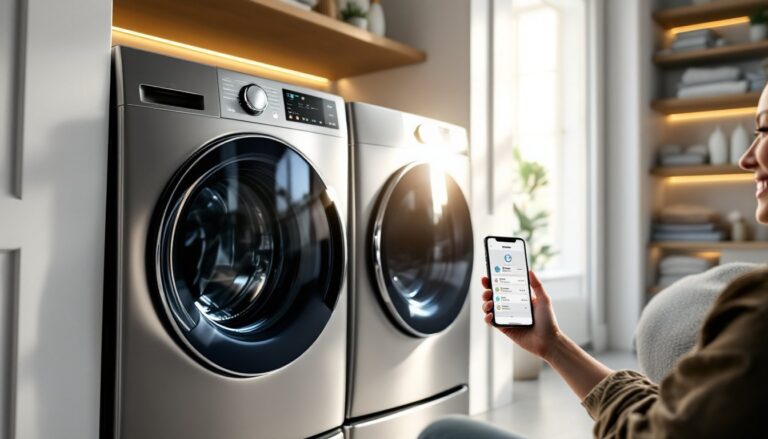
A smart washer or dryer is a connected appliance with built-in Wi-Fi that lets you monitor, control, and receive alerts through a smartphone app or voice assistant. Unlike traditional models that rely on dials and buttons, these machines communicate with your home network and send you notifications when a cycle finishes, alert you to maintenance issues, or let you start a load from your phone.
Why does this matter? The real-world benefit isn’t about showing off technology, it’s about reclaiming time and reducing forgotten laundry situations. A parent running errands can start the dryer remotely so clothes are warm and fresh when they arrive home. Someone with mobility challenges can control their washer without bending over multiple times. You’ll get alerts about door locks, water leaks, or detergent levels before they become problems.
Smart models also collect usage data, offering insights into energy consumption, cycle recommendations, and even fabric care tips tailored to your specific machine. This feedback loop helps you optimize your routine and catch issues early, potentially extending the appliance’s lifespan.
Key Features That Set Smart Models Apart
Remote Control and App Integration
The heart of a smart washer dryer is its mobile app, which typically lets you start, pause, or stop cycles from anywhere with an internet connection. Most apps also display real-time cycle progress, remaining time, and a detailed breakdown of what’s happening inside the drum.
Voice control through Alexa, Google Assistant, or Siri adds another layer of convenience. You can ask your device to start the dryer or notify you when a wash is complete without touching your phone. This sounds minor until you’re mixing dough with floury hands and can’t mess with your phone.
Beyond basic controls, premium smart models include features like stain detection and automatic cycle adjustment. Some washers use sensors to identify fabric type and soil level, then recommend or automatically select the ideal water temperature and spin speed. Dryers with moisture sensors adjust drying time in real time, reducing wrinkles and energy waste compared to fixed-time cycles.
Many brands now bundle their appliances into an ecosystem. If you own both a smart washer and dryer from the same manufacturer, they often “communicate”, the dryer can automatically adjust its settings based on what the washer just did, ensuring optimal care for each load.
Energy Efficiency and Cost Savings
Smart washers and dryers consume less water and energy than older models, partly because of improved mechanical design and partly because the connected features encourage better usage habits. A dryer with a moisture sensor, for instance, stops as soon as clothes are dry rather than running for a fixed 45 minutes regardless of load size.
Energy Star certified smart models typically use 25–40% less water and 20–30% less energy per cycle compared to non-certified machines from a decade ago. Over a year of average household use (roughly 300 loads), that translates to lower utility bills and reduced environmental impact. The exact savings depend on your local utility rates, current appliance age, and how often you do laundry.
These models also reduce fabric wear because sensors prevent over-drying and excessive heat, which can shorten the lifespan of clothes. That indirect cost savings, replacing fewer worn-out towels and jeans, isn’t always obvious at purchase but adds up over the appliance’s 10–15 year lifespan.
Keep in mind that smart features themselves don’t directly save energy: the efficiency comes from the underlying engineering and sensor technology. A non-smart, Energy Star certified washer from 2024 will perform similarly to a smart version in raw energy terms, but the smart version gives you visibility into consumption and better control over cycle selection.
Choosing the Right Smart Washer Dryer for Your Home
Start by assessing your space and needs. Smart washers and dryers come in standard widths (27–28 inches) and depths (30–35 inches), but stacked units and side-by-side configurations vary. Measure your laundry room’s opening, clearance above (if stacking), and nearby electrical and water hookups before shopping.
Decide whether you want separate washer and dryer or an all-in-one combo unit. Combo units save space but typically cost more and run longer wash-dry cycles. Separate machines are faster and offer more flexibility, you can run a delicate wash while heavy items dry, but require more floor space.
Reviews from testing organizations focused on smart washers and rankings of leading smart washer and dryer models show which brands have reliable app integration, strong customer support, and real longevity data. Read beyond feature lists and look for feedback on app stability, Wi-Fi connectivity reliability, and how manufacturers handle software updates.
Budget accordingly. Smart washers range from $700–1,400 and smart dryers from $600–1,300, depending on capacity, material (stainless steel vs. painted), and feature depth. A basic smart model with app control and moisture sensing costs less than one with advanced fabric detection and automatic detergent dispensing.
Consider your technical comfort level. Some households embrace every connected feature: others prefer simplicity. If you’re not interested in app notifications or voice control, don’t pay extra for those features, a standard energy-efficient model may serve you just as well.
Installation and Getting Started With Your Smart Appliance
Installation of a smart washer and dryer is no different from a standard model in terms of physical setup. You’ll need a dedicated 240-volt electrical circuit for the dryer (a requirement that hasn’t changed), proper water supply lines with shut-off valves for the washer, and a vent duct to the exterior for vented dryers.
The key difference is connecting the appliance to your Wi-Fi network and the manufacturer’s app. Most units have a setup wizard built into the on-unit touchscreen or accessible through the app itself. You’ll enter your Wi-Fi network name and password, create or log into a manufacturer account, and register the appliance’s serial number. This process typically takes 10–15 minutes.
Before your first load, check that the appliance recognizes Wi-Fi correctly by triggering a test notification from the app. If the signal is weak (the laundry room is far from your router), consider adding a Wi-Fi extender or mesh network node nearby to ensure consistent connectivity.
Review the manufacturer’s recommended setup for voice assistant integration if that’s part of your plan. Some brands require you to enable a skill or app within Alexa or Google Home before voice commands work. Read through the appliance’s user manual or support website for troubleshooting tips on app connectivity issues, many common problems are resolved by power-cycling the unit or refreshing the app.
After setup, run your first cycle on a light, lower-temperature setting to confirm everything communicates properly. This gives you confidence in the system before tackling your family’s actual dirty laundry. Comparisons of top-performing smart dryers and washers with full app functionality highlight models with straightforward setup processes and responsive manufacturers.
Conclusion
Smart washers and dryers deliver genuine value through convenience, energy savings, and early fault detection, not hype. They’re most compelling if you value time flexibility, have multiple users in your household, or want long-term visibility into appliance health. Start with your space and usage needs, pick a brand with solid support and app reliability, and don’t overpay for features you won’t actually use. A thoughtfully chosen smart laundry setup pays dividends in both daily ease and utility bills for years to come.